
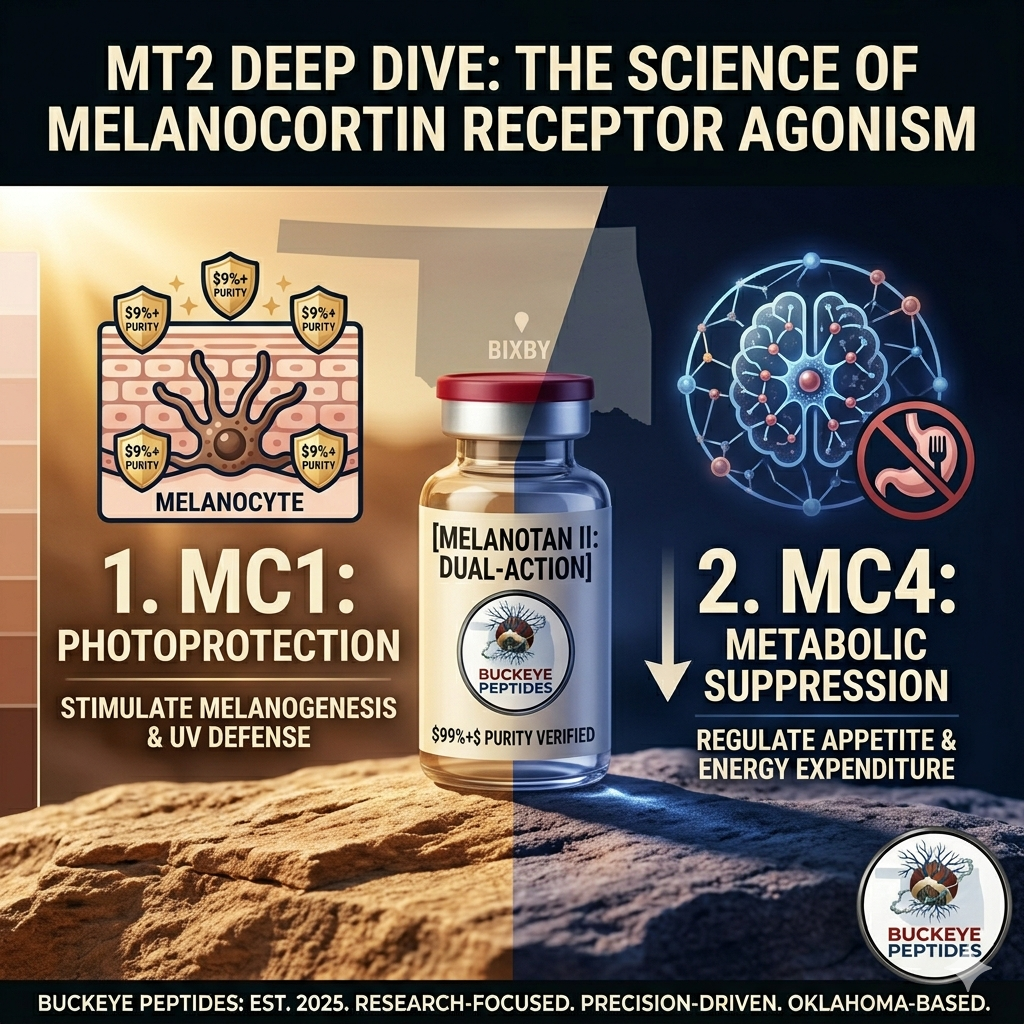
At Buckeye Peptides (Est. 2025), we emphasize data-driven research. While many researchers approach Melanotan II (MT2) primarily for its pigmentation effects, this synthetic analog of alpha-melanocyte-stimulating hormone (alpha-MSH) is a complex, non-selective agonist that interacts with multiple receptors in the body.
To truly understand MT2, a researcher must understand the Melanocortin System. Melanotan II has a strong binding affinity for the MC1, MC3, MC4, and MC5 receptors. Our 99%+ verified MT2 sequence is specifically synthesized to maintain this non-selective profile, which is critical for comprehensive systemic research.
Here is a detailed breakdown of the primary areas of MT2 receptor agonism.
The MC1 Receptor: Photoprotection and Tanning
The most recognized function of MT2 is its agonism of the MC1 receptor, located primarily on melanocytes (pigment-producing cells) in the skin.
The Mechanism: MT2 mimics natural alpha-MSH, binding to the MC1 receptor to stimulate melanogenesis—the production of melanin pigment. Crucially, research suggests this process can occur without direct UV exposure, making MT2 a potent tool for studying photoprotection and defense against UV-induced damage.
Research Application:
- Photoprotection: Investigating the ability to induce pigmentation as a primary defense against sun-induced erythema (sunburn).
- Pigment Correction: Studying potential applications in addressing hypopigmentation disorders.
The MC4 Receptor: Metabolism, Appetite, and Libido
The MC4 receptor is found primarily in the central nervous system, particularly in the hypothalamus, which regulates energy balance and sexual function.
The Mechanism: Activation of MC4 by MT2 is associated with increased energy expenditure and potent anorexigenic (appetite-suppressant) effects. This same pathway is heavily linked to the mediation of sexual arousal, making MT2 a key sequence for researching both metabolic efficiency and sexual dysfunction.
Research Application:
- Weight Management: Studying the MC4-mediated reduction in food intake and potential increase in metabolic rate.
- Sexual Health: Investigating the CNS-mediated activation of erectile function in males and arousal in females.
3. Key Research Considerations for MT2
MT2 is a powerful sequence and requires precise, informed administration. Researchers should note several key points when constructing a protocol.
A note on dosage (mcg vs. mg):
MT2 protocols are almost always measured in micrograms (mcg), not milligrams (mg). For example, a 10 mg vial, when reconstituted with 2 mL of BAC water, yields a concentration of 5 mg/mL, which is 5,000 mcg/mL. A common initial research dose might be 250 mcg, which is only 5 units on a standard insulin syringe. This underscores the need for extreme mathematical precision. (For a full review, see our Peptide Math 101: The Definitive Guide to Reconstitution and Dosing).
Systemic Considerations:
Due to its systemic nature, initial MT2 administration can result in noticeable side effects, including transient nausea, facial flushing, and increased libido. The non-selective nature of MT2 means these effects are part of the complex data profile of the sequence.
The Verdict: Data Integrity Requires Precision Materials
Understanding MT2 means respecting its multifaceted impact on the MC1 (Skin), MC3/MC4 (CNS/Metabolism), and MC5 (Exocrine) systems. At Buckeye Peptides (Est. 2025), we provide the purity you need to ensure your data is accurate and reproducible. Based in Oklahoma, we are your partner in precision-driven research.
[Shop Our 99% Purity Or Greater Melanotan II and Full Catalog Here]
Oklahoma-based. Research-focused. Precision-driven.
