
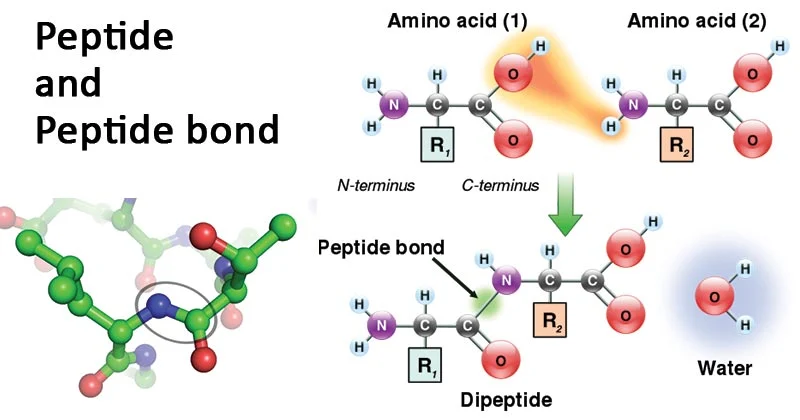
In the world of research chemicals, the efficacy of a study is only as reliable as the stability of its materials. Peptides are essentially short chains of amino acids linked by peptide bonds—and while they are powerful, they are fundamentally fragile.
Understanding the degradation kinetics of these molecules isn’t just “good practice”; it is a requirement for maintaining the integrity of your research data.
1. The Suspension State: Lyophilization vs. Reconstitution
Peptides are most stable in their lyophilized (freeze-dried) state. Through the process of sublimation, water is removed while the material is frozen, leaving a “cake” or powder that exists in a state of suspended animation.
- Shelf Life: In this powder form, most peptides (like BPC-157 or CJC-1295) remain stable at room temperature for weeks, or in a standard freezer (-20°C) for years.
- The Transition: The moment a solvent (like Bacteriostatic Water) is introduced, the “clock” starts. Once reconstituted, the peptide bonds are exposed to hydrolysis and microbial risks.
2. Kinetic Energy and the “Vial Shake” Myth
A common debate in the community is whether vigorous shaking “breaks” a peptide. While amino acid chains are microscopic, they are held together by disulfide bonds.
Excessive kinetic energy (violent shaking) can cause mechanical shearing or denaturation. While a single shake won’t destroy a vial, gentle swirling is the scientific standard to ensure the delicate secondary structure of the protein remains intact.
🔬 Research Note: Our lyophilized materials are processed in a controlled environment to ensure maximum structural integrity before they ever reach your lab. [View our Current Inventory]
3. The Three Enemies of Stability: Heat, Light, and pH
To maintain the molecular signature of your materials, you must guard against the “Triple Threat” of degradation:
- Thermal Stress (Heat): High temperatures accelerate the rate of chemical reactions. For researchers in warmer climates (like our Tulsa fulfillment center’s home state), we ensure materials spend as little time in transit as possible to avoid thermal breakdown.
- Photo-Degradation (Light): UV rays can catalyze the oxidation of specific amino acids like Tyrosine and Tryptophan. Always store vials in a dark environment or opaque container.
- pH Fluctuations: Peptides have an “isoelectric point” where they are most stable. Using properly buffered Bacteriostatic Water ensures the pH remains within the narrow window required to prevent premature precipitation.
4. Storage Protocols for the Modern Researcher
For consistent results, we recommend the following “Gold Standard” storage hierarchy:
5. Summary: Data > Hype
Maintaining material integrity isn’t about following “rules”—it’s about protecting your data. When a peptide degrades, your research becomes a guessing game. By mastering the science of storage, you ensure that the only variable in your study is the one you intended to test.
Buckeye Peptides | Tulsa, OK Quality is the only variable.
The Buckeye Standard: From Our Lab to Yours
Scientific breakthroughs require materials that haven’t been compromised by poor storage or cut-rate logistics. At Buckeye Peptides, we prioritize molecular stability from the moment of synthesis to the moment of delivery.
Ready to begin your next study with verified materials? [Shop the Buckeye Collection] Use code BUCKEYE1 at checkout for a research-exclusive discount.
